ChessWeb
ChessWeb is a real-time, multiplayer chess platform that provides a clean, distraction-free environment for mastering the game of chess.
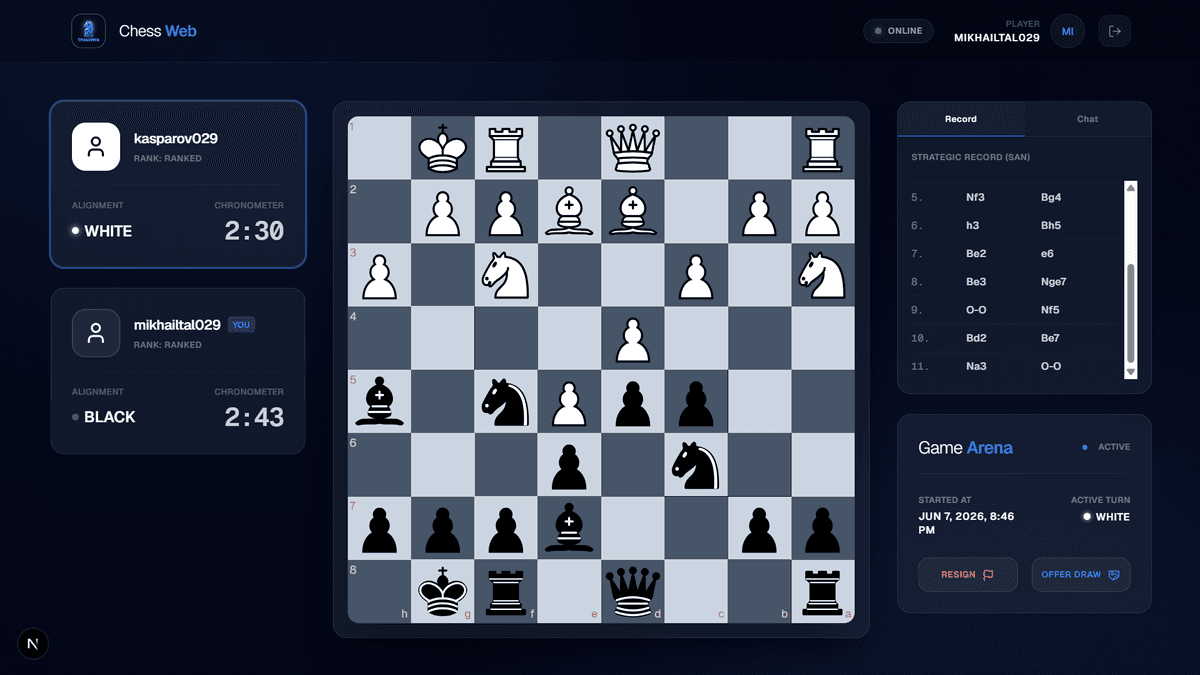
A real-time multiplayer chess platform — because building CRUD apps wasn't teaching me enough.
About
Chess-Web is a full-stack, real-time multiplayer chess platform where two players connect, play a live game, and see every move reflected on each other's board with zero page reloads. Every move is validated server-side, every game is persisted to Postgres, and the whole thing is locked behind proper JWT auth with refresh token rotation.
It started as a WebSockets learning project. It turned into the most technically demanding thing I've built — stateful server sessions, concurrent move processing, server-managed game clocks, and a backend that has to be the single source of truth for a game that moves fast.
Features
- Real-time multiplayer — WebSocket + STOMP protocol keeps both boards in sync with sub-100ms move propagation
- Server-side move validation — the
chesslibengine runs on the backend; the client never has the final say on whether a move is legal - Game lobby — create games with custom time controls, browse open games, join with one click
- Server-managed timers — clocks run on the server with a scheduled cleanup job that handles timeouts and abandoned games
- In-game chat — real-time messaging between players during a match
- Move history — full algebraic notation (SAN) with a scrollable move list synced to the game
- PGN export — download any game for analysis in external chess engines
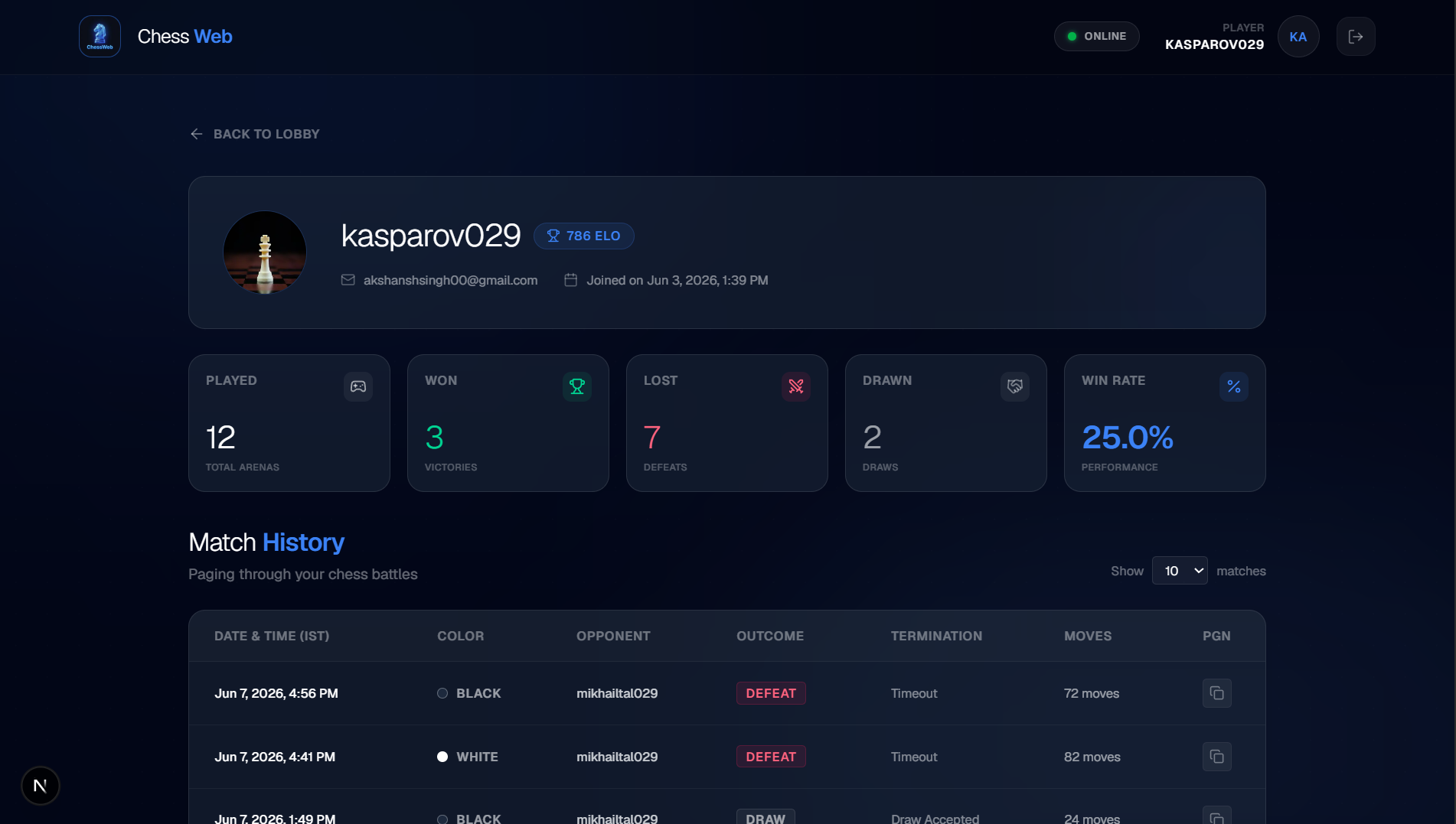
- Player profiles — game history, stats, and past match records
- JWT auth with refresh rotation — short-lived access tokens, long-lived refresh tokens that rotate on use
- Email verification — new accounts verified via transactional email before login
Tech Stack
Backend
| Runtime | Java 21 with Virtual Threads enabled |
| Framework | Spring Boot 4.x |
| WebSocket | Spring WebSocket + STOMP messaging protocol |
| Auth | Spring Security + JWT (access + refresh token rotation) |
| Chess Engine | chesslib — server-side move validation and FEN management |
| Database | PostgreSQL + Spring Data JPA |
| Migrations | Flyway |
| Resend API |
Frontend
| Framework | Next.js 16 (App Router) |
| Language | TypeScript |
| Styling | Tailwind CSS 4 |
| State | Zustand + React Context |
| Chess UI | react-chessboard + chess.js (client-side UX validation) |
| WebSocket | @stomp/stompjs + SockJS |
| Animations | Framer Motion + GSAP |
| Icons | Lucide React |
Architecture
The system follows a decoupled client-server architecture with a clear separation between real-time game communication and standard REST operations.
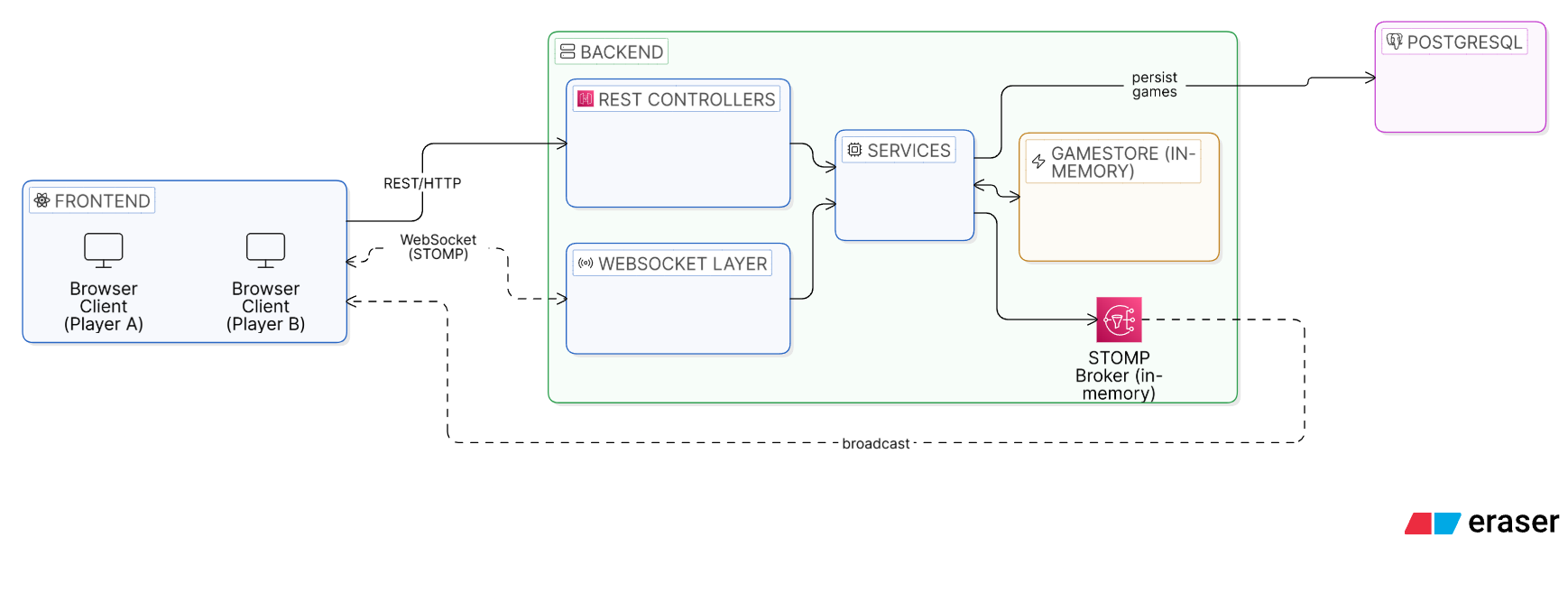
Key design decisions:
WebSocket + STOMP over REST — chess moves need to reach both players in milliseconds. REST's request-response model can't push to clients; WebSocket can. STOMP adds pub-sub routing on top so each game has its own channel (/topic/game.{id}) and private messages route per-user.
In-memory game store, Postgres on completion — writing every move to the database mid-game would add unnecessary latency to the hot path. Active games live in a ConcurrentHashMap<UUID, GameSession> with fine-grained per-session locking. On game end, the full move list is flushed to Postgres in a single transaction.
Server is the source of truth — client-side chess.js validates moves for instant UI feedback (piece snaps back immediately on an illegal move), but the server re-validates everything with chesslib before broadcasting. Clients don't update their board from their own move — they wait for the server's broadcast.
Java 21 Virtual Threads — each WebSocket connection runs on a virtual thread, making it cheap to handle many concurrent games without blocking platform threads on I/O.
Fine-grained concurrency — withGameLock(gameId, fn) acquires a lock on the specific GameSession object, not the whole store. Two concurrent games don't block each other. Move processing and a background timeout scheduler both use this pattern.
Screenshots
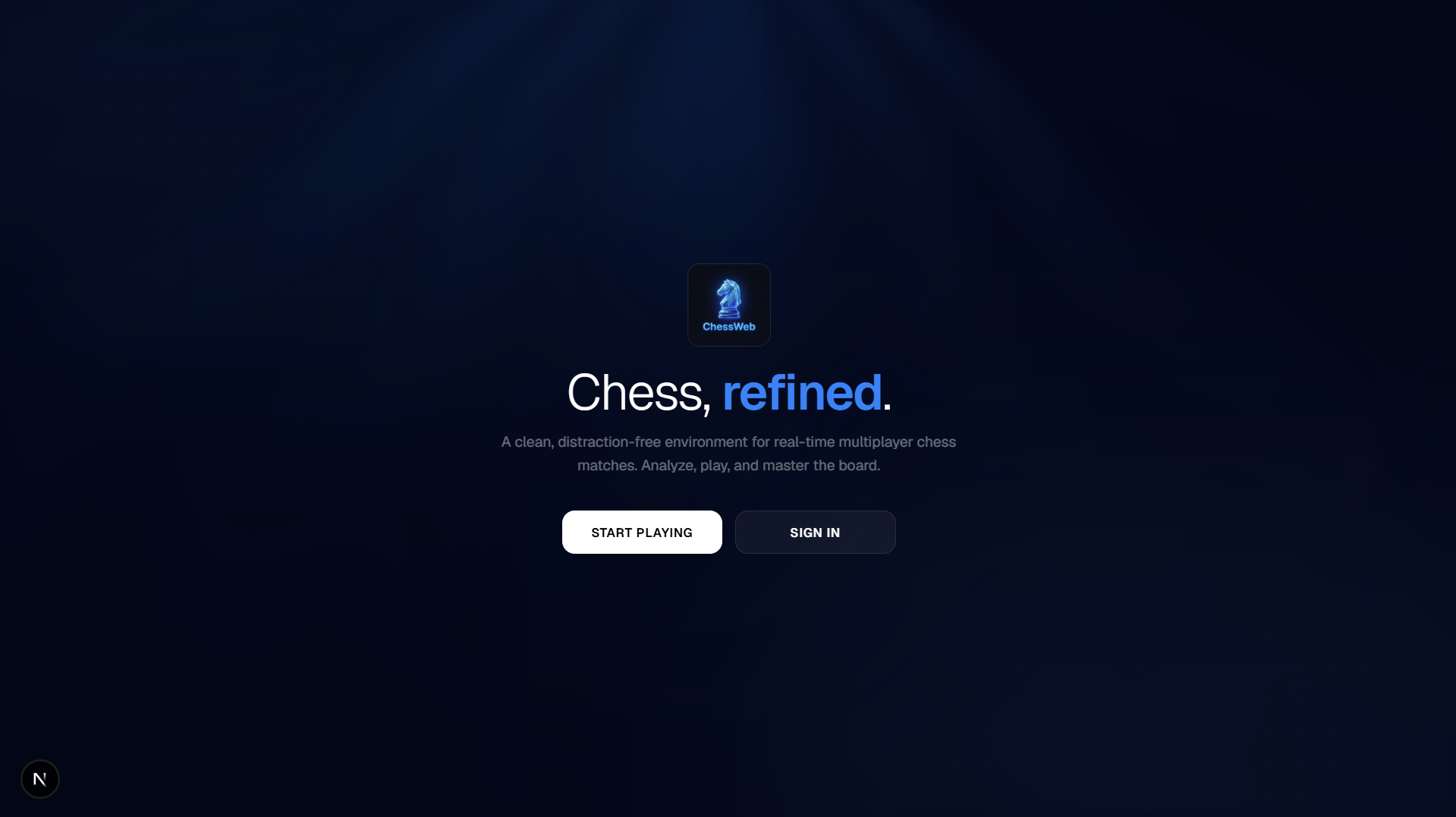
Landing Page
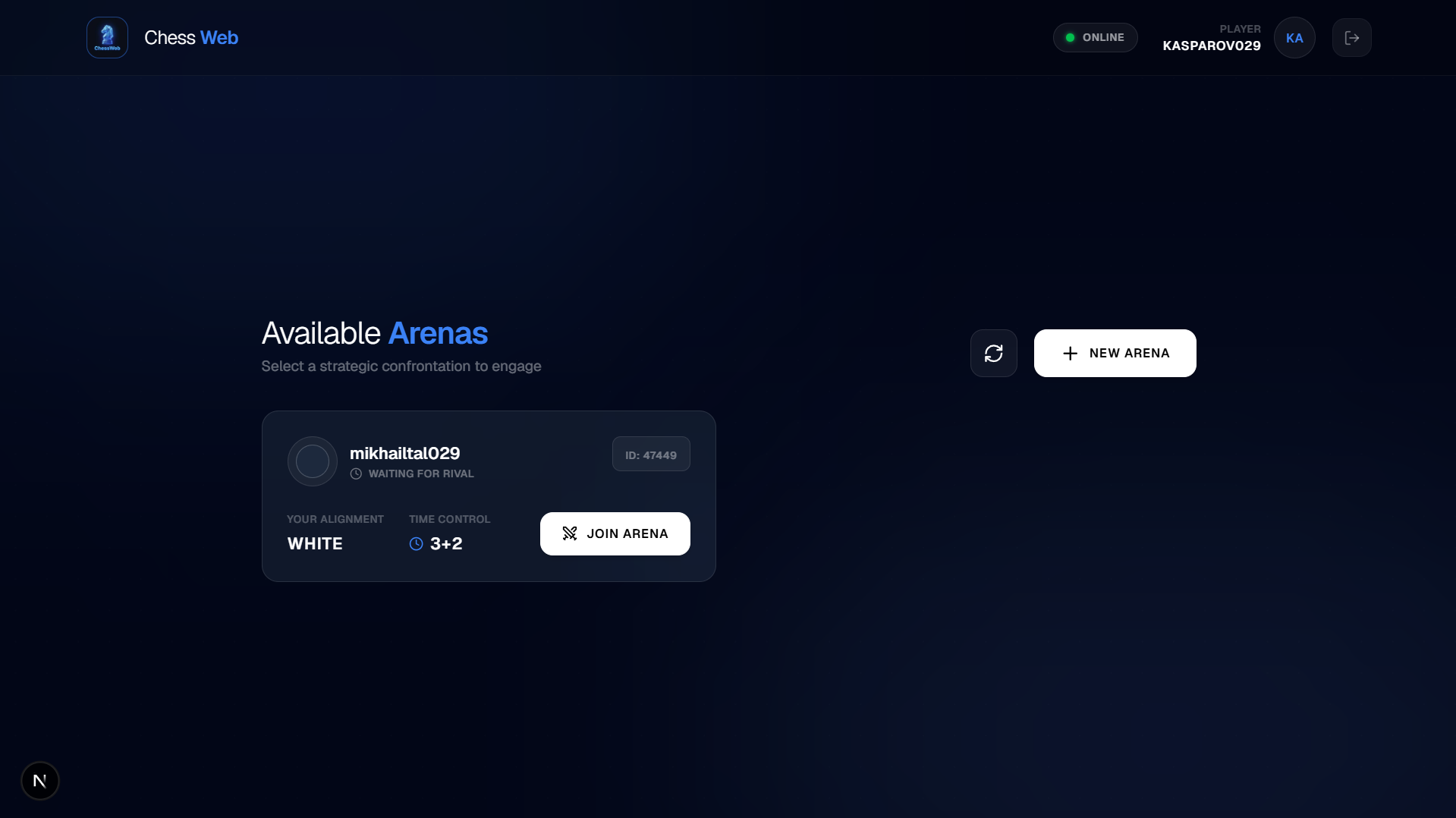
Game Lobby
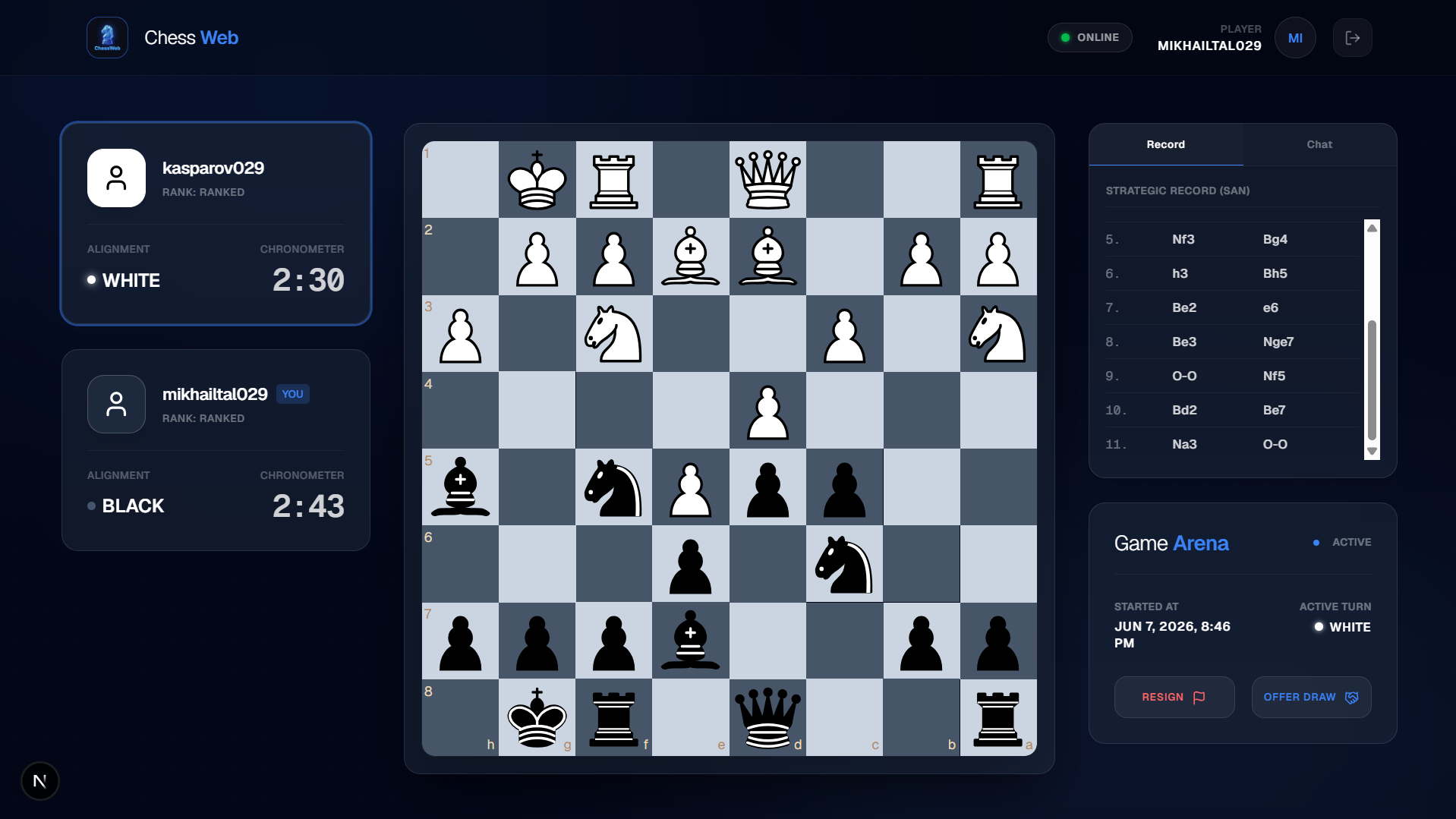
Live Game
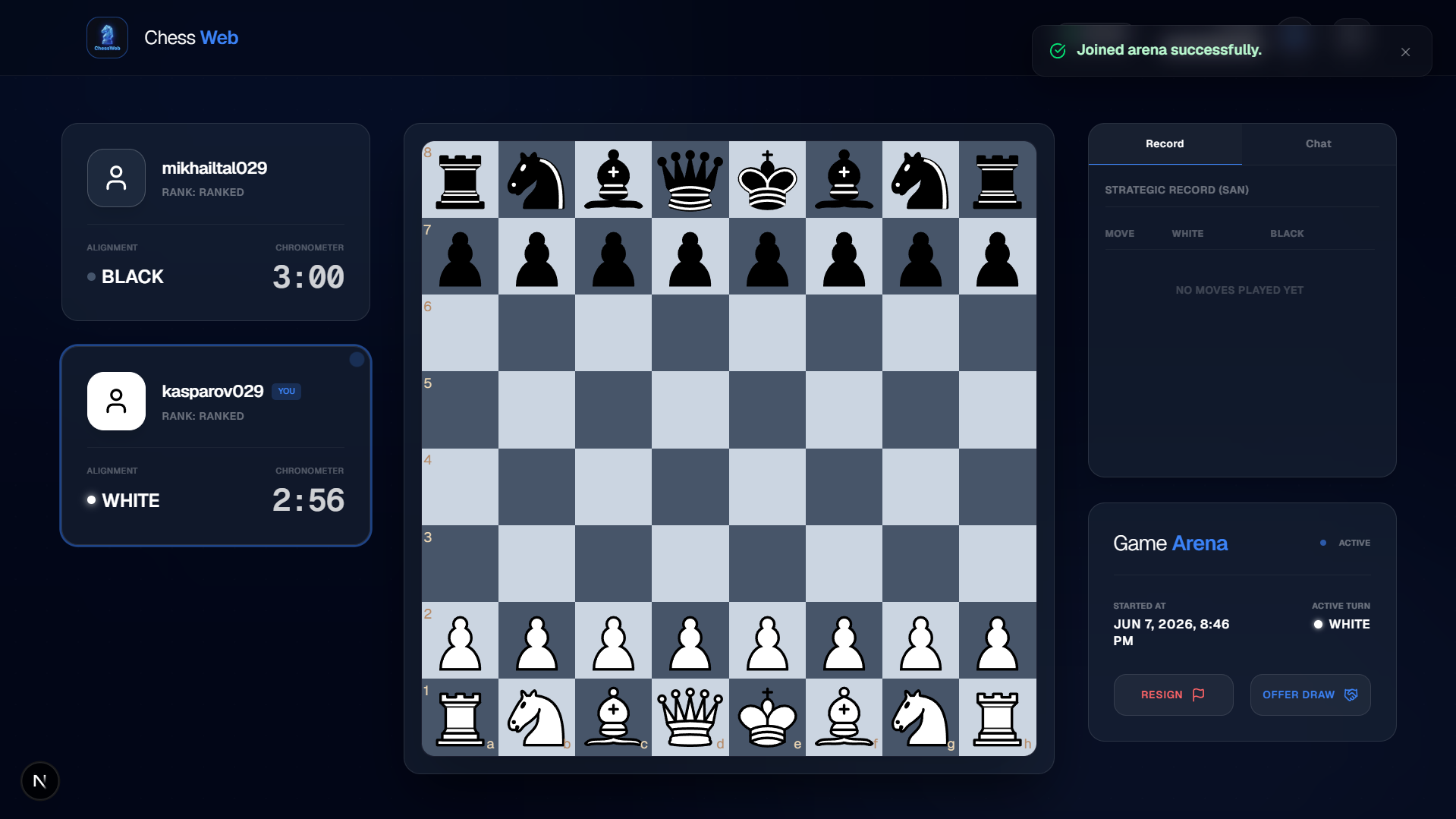
Mid-Game
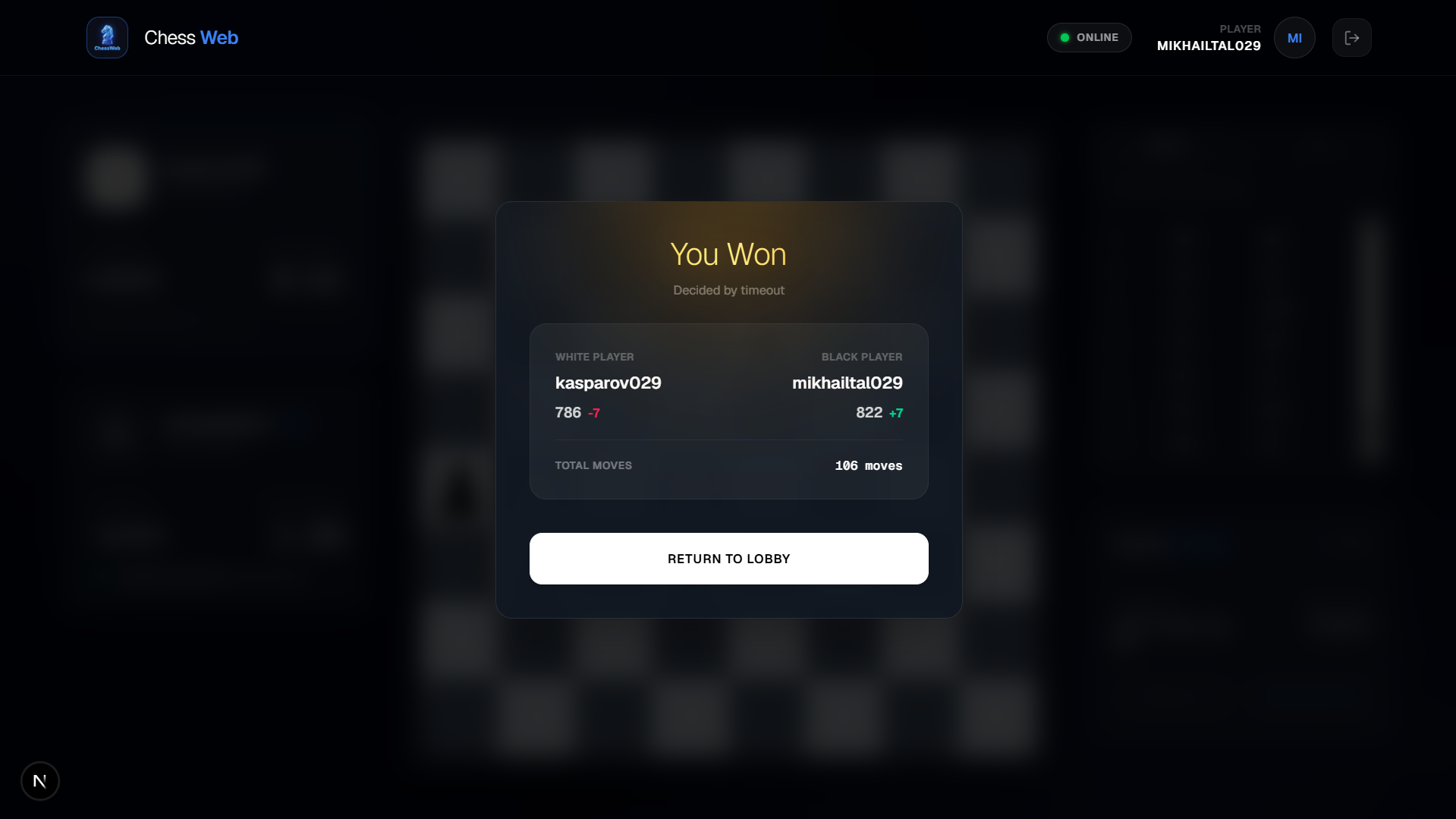
Game Over
Player Profile
Auth
| Login | Register |
|---|---|
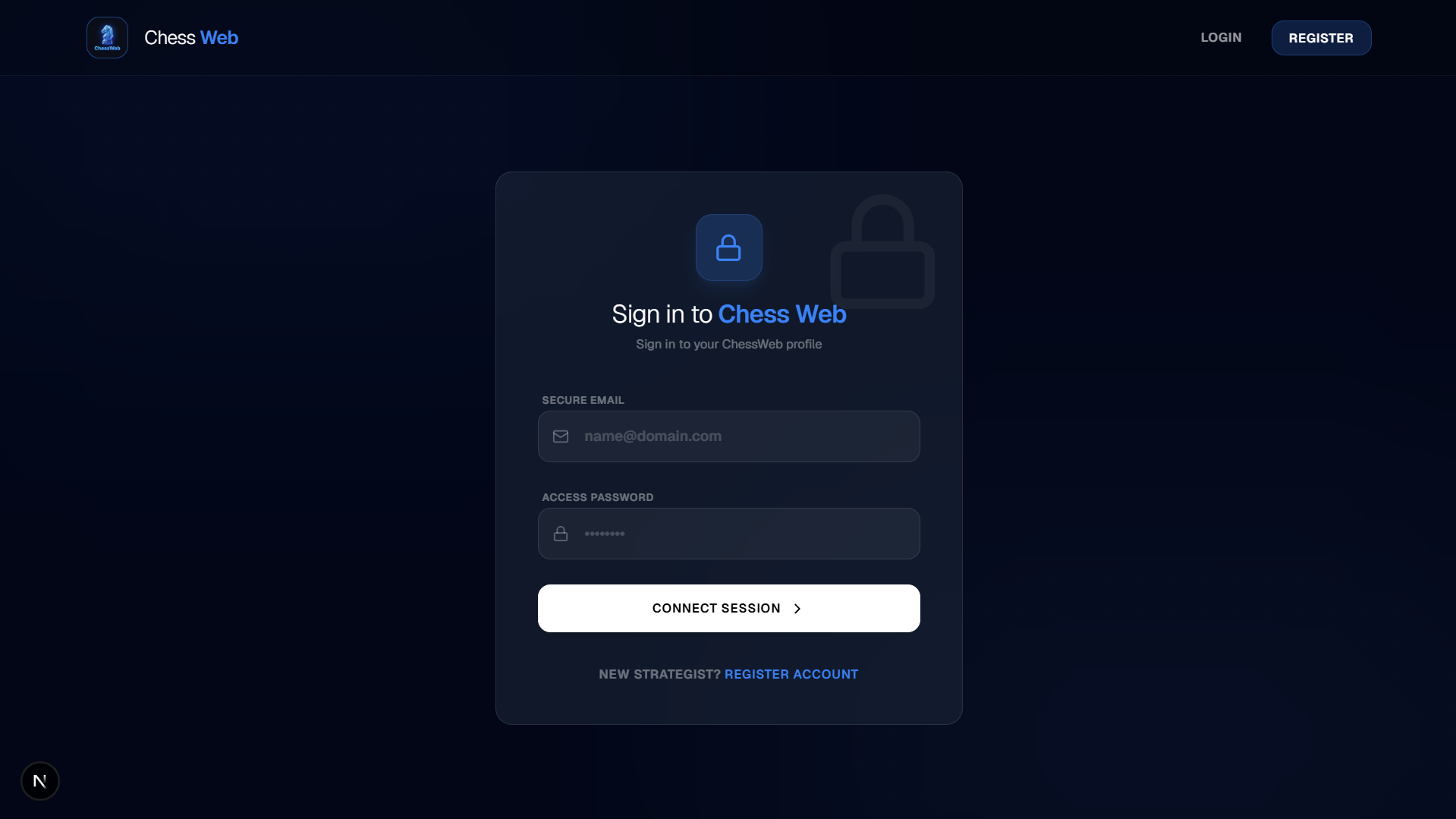 | 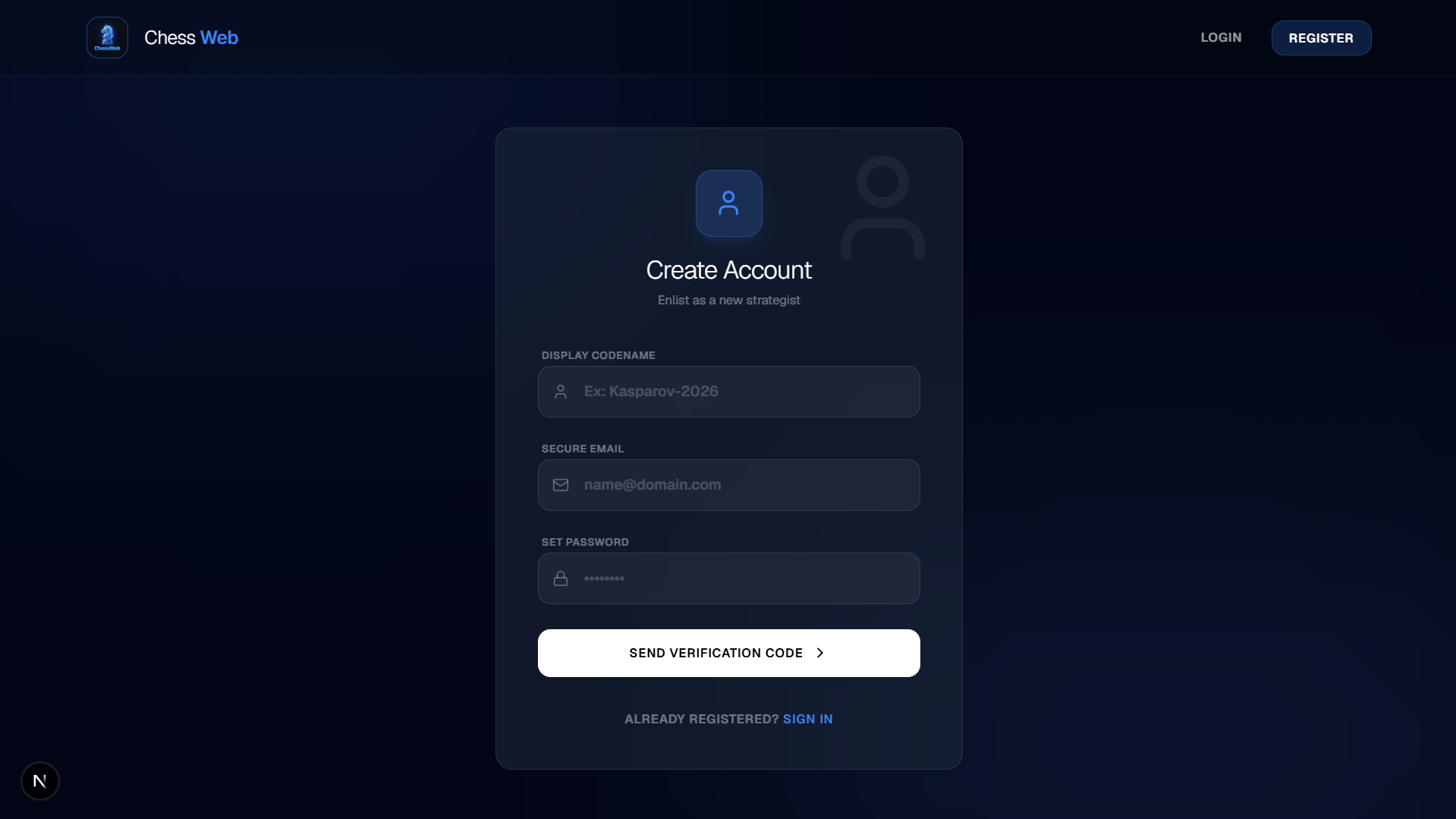 |
Security
JWT with refresh token rotation — access tokens expire in 15 minutes. Refresh tokens are long-lived but rotate on every use: each refresh issues a new token and invalidates the old one. Stolen refresh tokens can only be used once before they're dead.
WebSocket authentication — a custom STOMP interceptor validates the JWT on the WebSocket handshake before the connection is established. Unauthenticated connections are rejected before they can subscribe to any game channel.
Server-side move authorization — before processing any move, the backend checks that the requesting user is actually a player in that game and that it's their turn. The game ID and player identity come from the server session, not the client payload.
Email verification — accounts can't log in until the email address is verified via a Resend-delivered confirmation link.
What's Next?
- Making GameStore properly thread-safe
- ELO rating system — calculate and update ratings after each game, with a leaderboard
- Game analysis — post-game engine analysis showing best moves and blunders
- Friend system — add friends and challenge them to a direct game
- Tournament mode — bracket-based multi-round tournaments